


Understanding Orthodontic Appliances
A straighter, healthier smile often involves more than just braces. Explore our comprehensive guide to the specialized tools used to guide dental development and maintain alignment.

What are Orthodontic Appliances
Orthodontic appliances are tools we use to guide jaw growth, correct bite problems, create space, straighten teeth, and maintain results after treatment. Each appliance is chosen based on your specific needs, age, and stage of development to ensure efficient and predictable results.
Some appliances are fixed, meaning they stay in place and work continuously, while others are removable for added flexibility. Many are used before or alongside braces or clear aligners to prepare the teeth and jaws, and others are used after treatment to help keep your new smile in place. Here are some appliances commonly used in orthodontic treatment:
Growth & Jaw Development
These appliances are typically used in growing children to guide how the jaws develop. By influencing jaw position early, they can help prevent more complex issues later and create a better foundation for future treatment.
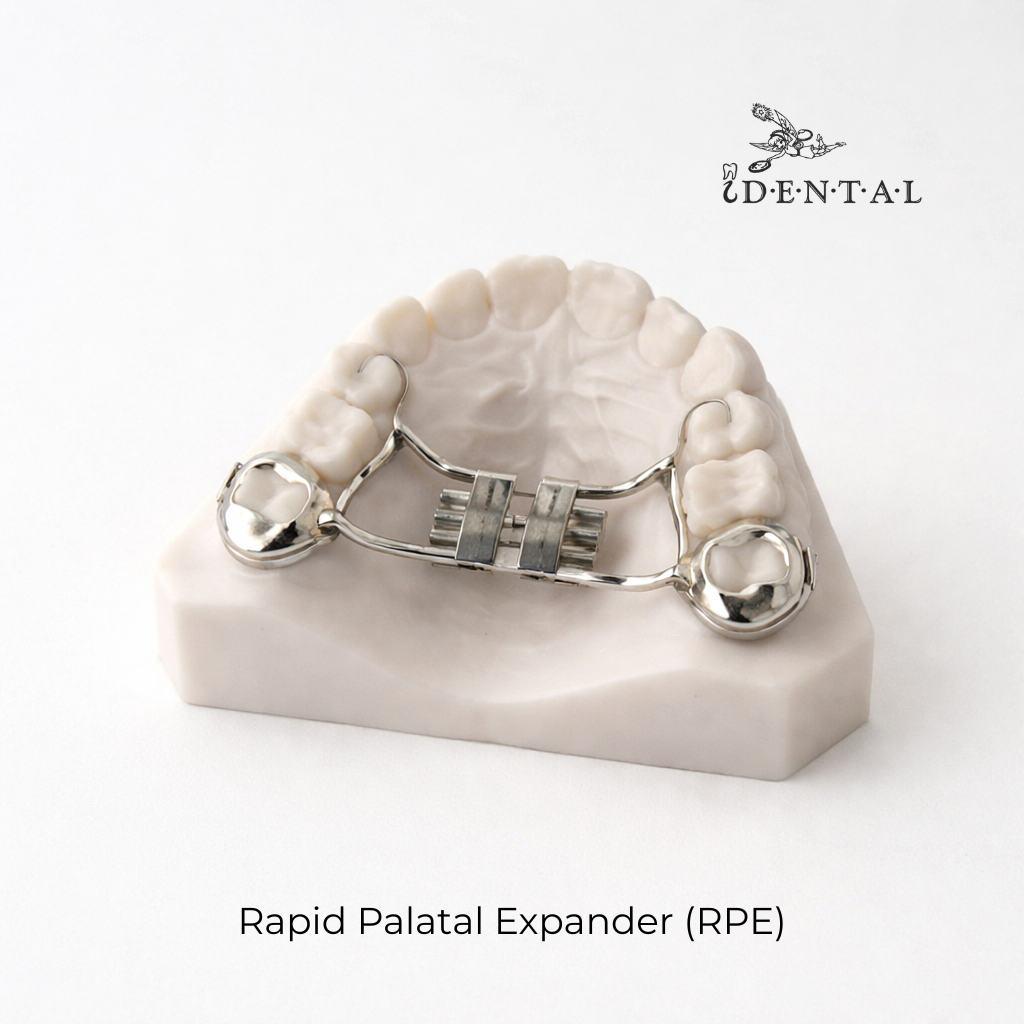
Rapid Palatal Expander (RPE)
A Rapid Palatal Expander (RPE) is an orthodontic appliance that gently widens the upper jaw to create more space and improve how the upper and lower teeth fit together. It is most commonly used in growing children and teens when the upper jaw is too narrow, which can contribute to crowding, a crossbite, or airway concerns related to a constricted palate. The expander is custom-made and typically fits around the upper molars. As it is adjusted over time, it guides the palate to expand in a controlled, gradual way.
Most patients feel pressure or tightness, especially right after adjustments, rather than sharp pain. As the upper jaw widens, a temporary gap can appear between the front teeth. This is normal and often closes on its own or is later corrected with braces or aligners. After the desired expansion is reached, the RPE stays in place for a period of time to help the new width stabilize, supporting a healthier bite and a better foundation for orthodontic treatment.
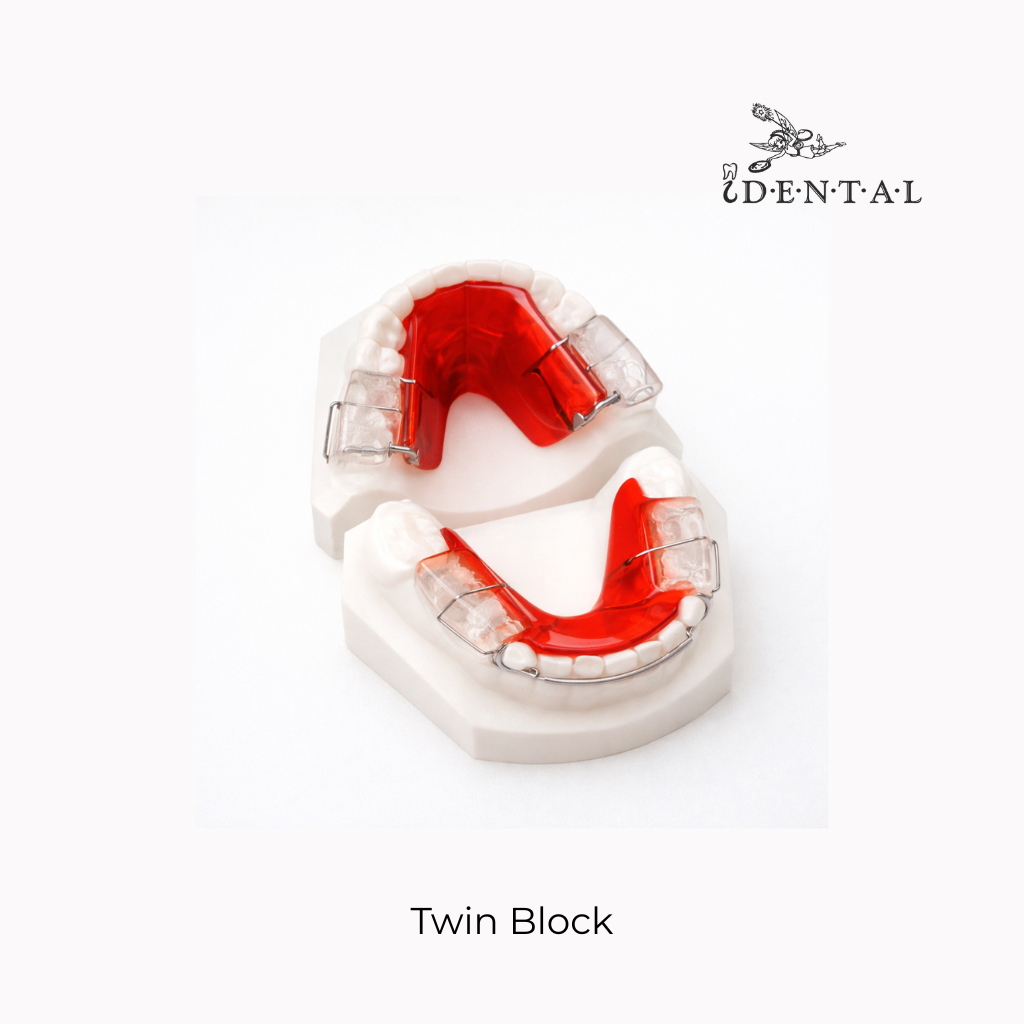
Twin Block
A Twin Block is a removable orthodontic appliance used to help correct an overbite when the lower jaw sits too far back. It is made of two custom pieces, one for the upper teeth and one for the lower teeth, with angled surfaces that guide the lower jaw forward when the patient bites down. This forward positioning can improve the bite, support healthier jaw development in growing children and teens, and create a better foundation for future orthodontic treatment.
Because it is removable, success depends on wearing it as directed, usually for most of the day and night. Patients may notice extra saliva, mild soreness, or changes in speech at first, but these usually improve as they adjust. The Twin Block should be taken out for brushing and cleaned daily to reduce plaque buildup and odor. Over time, consistent wear can help align the bite relationship and reduce the need for more extensive correction later.
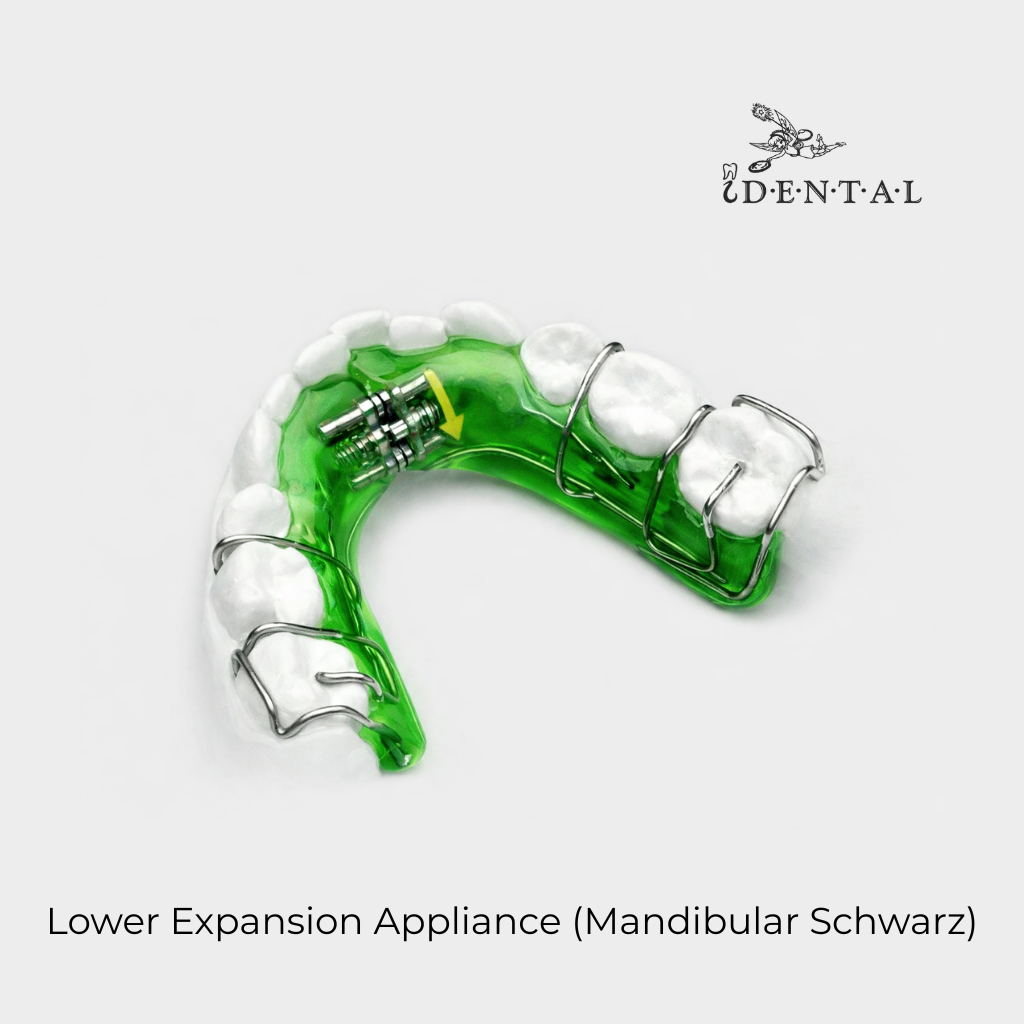
Lower Expansion Appliance
A Lower Expansion Appliance, often called a Mandibular Schwarz appliance, is a removable orthodontic device designed to widen the lower dental arch and create space when the lower jaw is narrow. It is commonly used in children and teens to help manage crowding, improve arch shape, and support a more balanced bite. The appliance is custom-made to fit the lower teeth and usually includes an adjustable screw in the middle that allows slow, controlled expansion over time.
As the appliance is adjusted, patients may feel pressure or tightness for a day or two, and speech can sound different at first. Because it is removable, results depend on wearing it exactly as prescribed, often for most of the day and night. Daily cleaning and good brushing are important since plaque can build up around the appliance and teeth. With consistent wear, a Mandibular Schwarz appliance can create room for better alignment and may reduce the need for tooth extractions or more complex orthodontic treatment later.
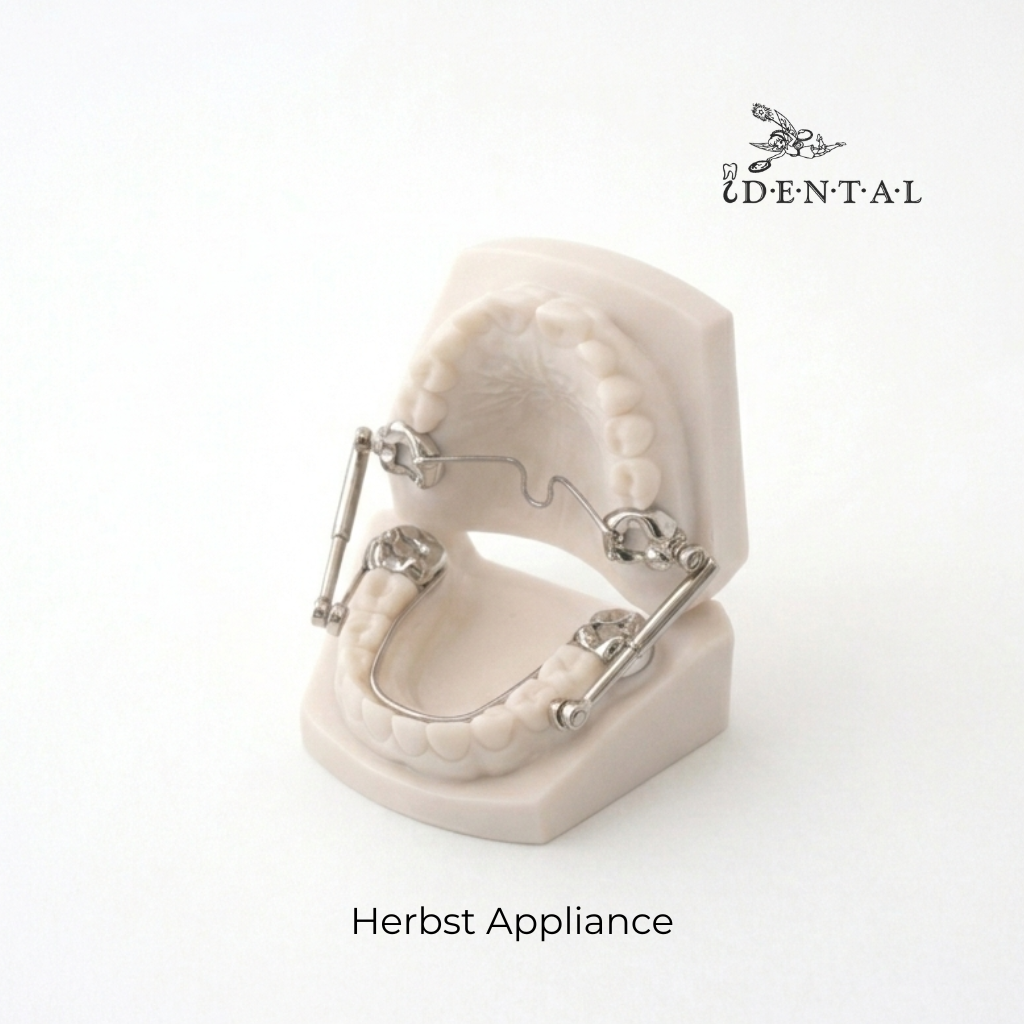
Herbst Appliance
A Herbst appliance is an orthodontic device used to help correct an overbite when the lower jaw sits too far back. It works by gently guiding the lower jaw forward into a better position, which can improve how the teeth come together and support more balanced jaw growth in growing children and teens. The appliance is usually attached to the back teeth on the upper and lower jaws and uses small metal arms that keep the jaw in a forward posture throughout the day and night.
At first, patients often notice pressure, muscle fatigue, or mild soreness as the jaw adjusts to the new position. Eating and speaking can feel different for a short time, but most people adapt within a couple of weeks. Good brushing and careful cleaning around the appliance are important since food can get trapped more easily. By improving the bite relationship early, a Herbst appliance can reduce the amount of correction needed later and create a stronger foundation for braces or aligners if they are still needed.
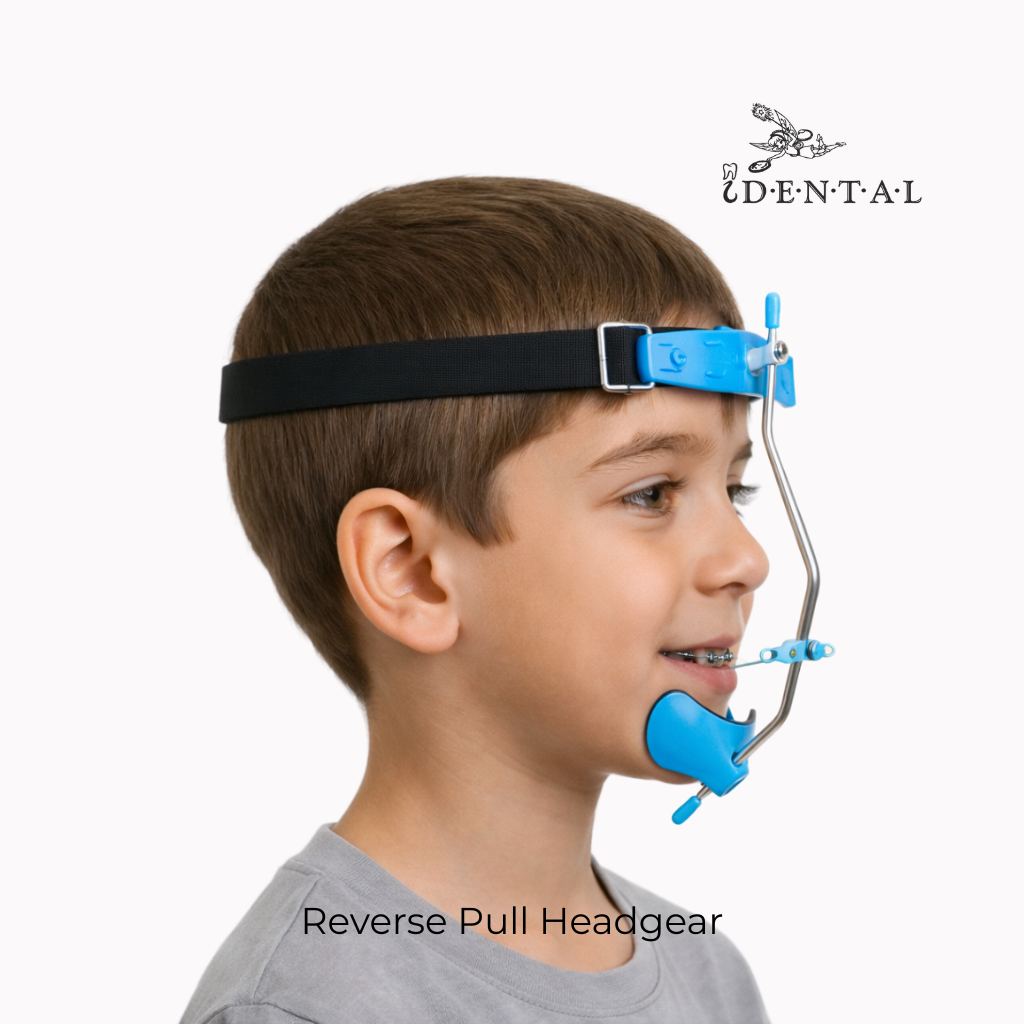
Reverse Pull Headgear
A Reverse Pull Headgear, also called a Facemask, is an orthodontic appliance used to help correct an underbite when the upper jaw is too far back compared to the lower jaw. It works by applying gentle forward pressure to guide the upper jaw and upper teeth into a better position. This treatment is most effective in growing children because it supports jaw development while the facial bones are still changing.
The facemask is worn outside the mouth and is usually connected to a custom orthodontic appliance inside the upper jaw using small elastics. Patients typically wear it for several hours a day, often in the evening and overnight, based on the orthodontist’s instructions. Mild pressure or soreness can happen at first, but most patients adjust quickly. With consistent wear, a reverse pull headgear can improve bite function, facial balance, and reduce the need for more complex treatment later.
Bite Correction
Bite correction appliances focus on how the upper and lower teeth fit together. They help address issues like overbite, underbite, crossbite, and open bite, improving both function and long-term oral health.
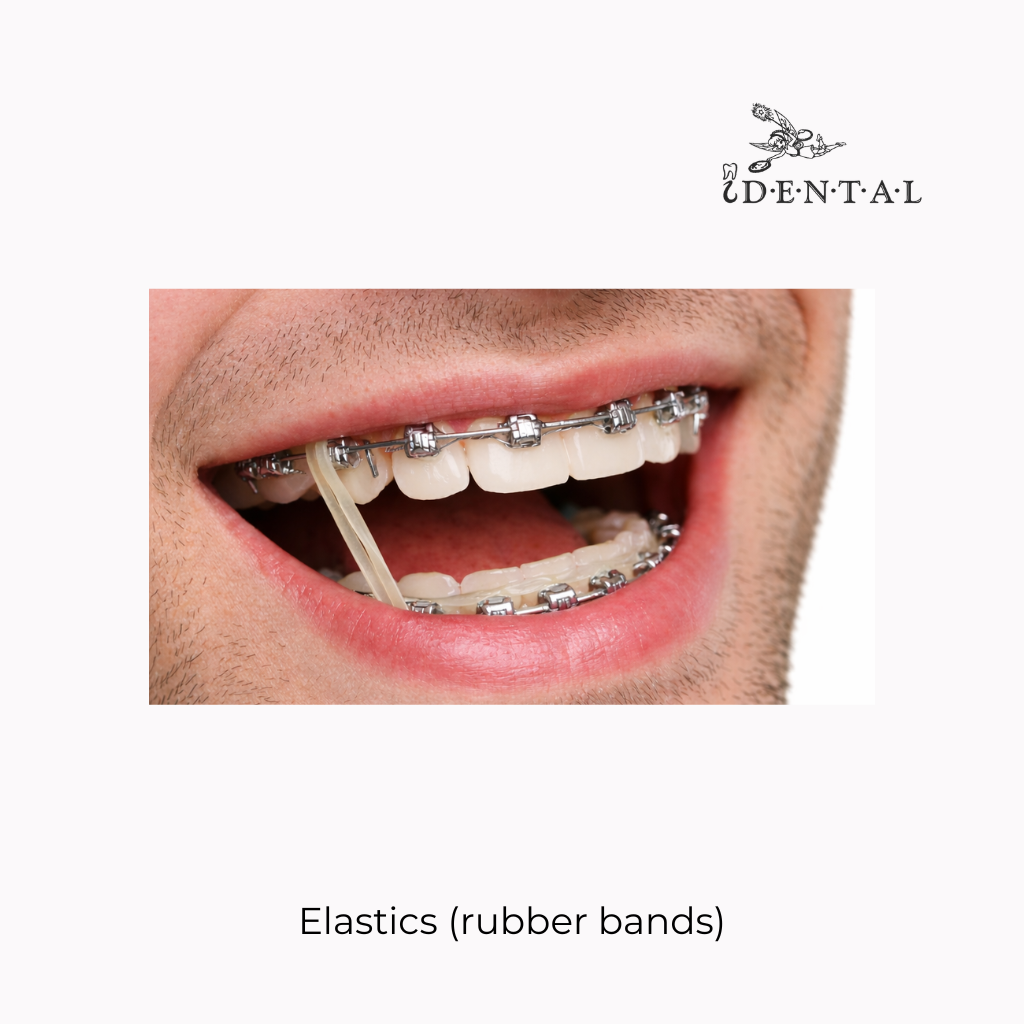
Elastics
Elastics, also called rubber bands, are small bands you wear with braces or clear aligners to help guide how your upper and lower teeth fit together. They connect specific teeth (usually from the top to the bottom) to correct bite issues like overbites, underbites, crossbites, or gaps between the arches. You may feel mild pressure when you start or change elastics, which is normal and means they are working.
For best results, elastics need to be worn exactly as directed, usually most of the day and night, and changed regularly. Skipping wear or only wearing them occasionally can slow progress and may extend treatment time. If an elastic breaks or feels uncomfortable, replace it with a new one and let our team know if you keep having issues.
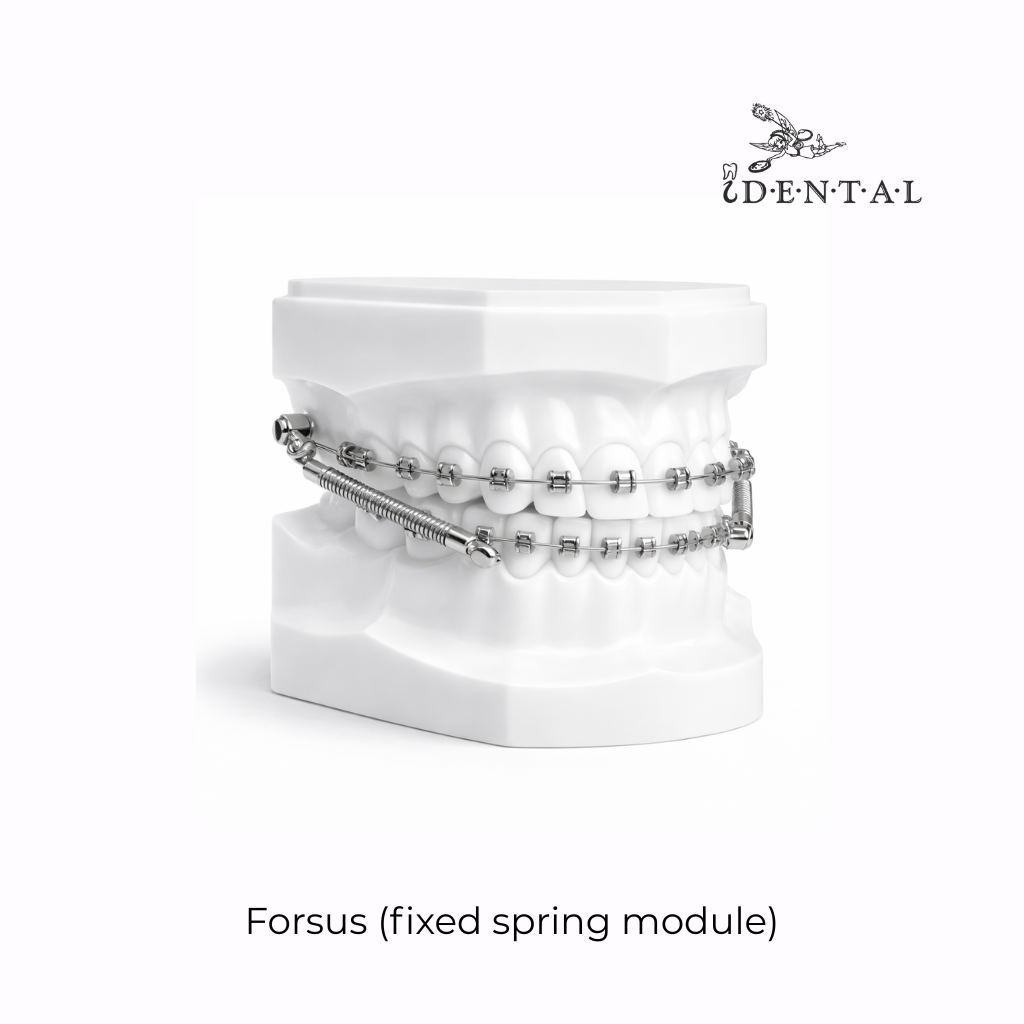
Forsus
Forsus is a fixed spring module used with braces to help correct a bite where the upper teeth sit too far forward compared to the lower teeth, often called an overbite or a Class II bite. It uses a gentle spring force to guide the lower jaw forward and bring the upper and lower teeth into a healthier fit, without relying on removable appliances.
Because Forsus is attached to your braces, it works all day and night. You may feel pressure or soreness for a few days after it is placed or adjusted, and your cheeks can feel a little irritated at first as you get used to it. Good brushing and careful eating help prevent issues, and we will show you what foods to avoid and what to do if anything feels pokey or comes loose.
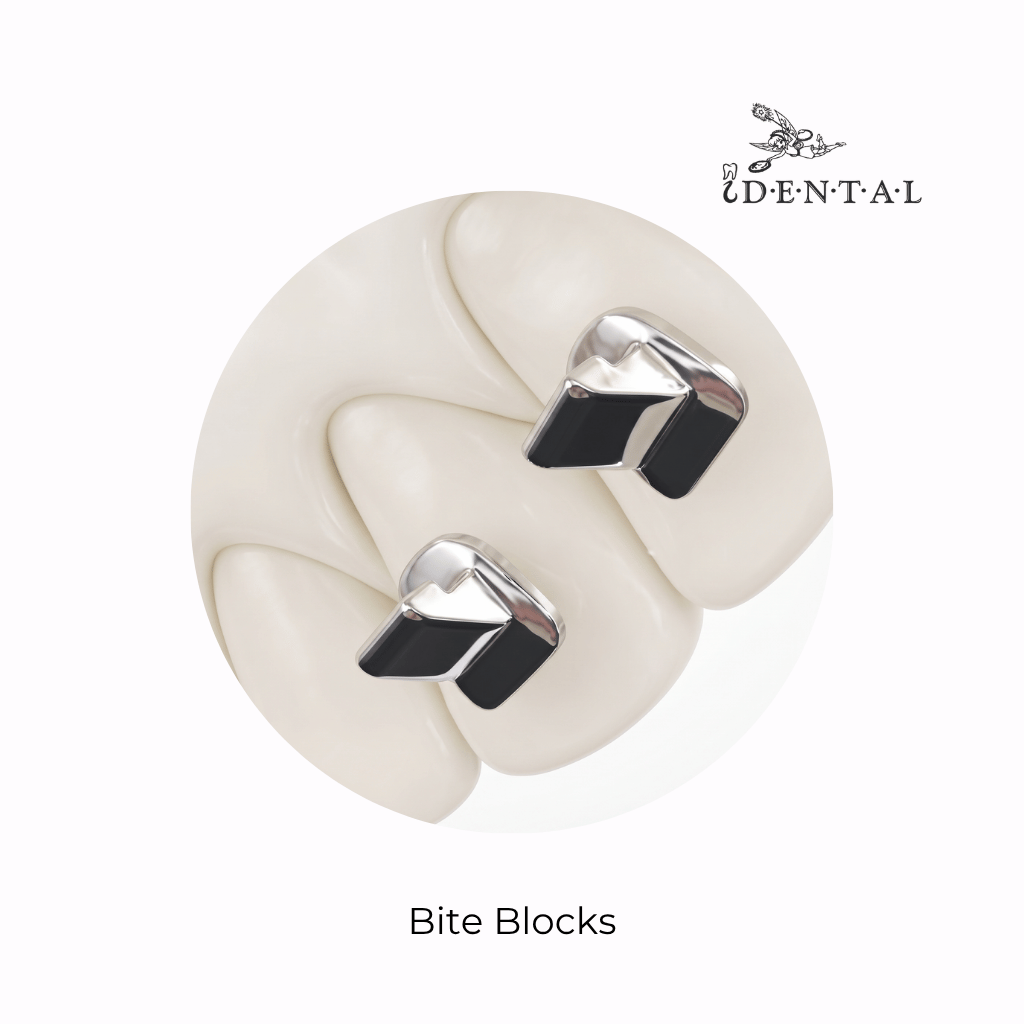
Bite Blocks
Bite Blocks, also called Bite Turbos, are small buildups placed on the chewing surfaces of certain teeth (often the back molars or sometimes behind the front teeth). Their job is to slightly “open” your bite so your upper and lower teeth do not hit braces brackets, aligner attachments, or wires while your teeth are moving. They can also help guide the bite into a healthier position and reduce the risk of breaking brackets during treatment.
When bite turbos are first placed, chewing may feel awkward and your teeth may not touch the same way. This is normal and most patients adjust within a few days to a couple of weeks. Stick to softer foods at first, cut food into smaller pieces, and keep brushing carefully around them. Bite turbos are temporary and are removed once they are no longer needed.
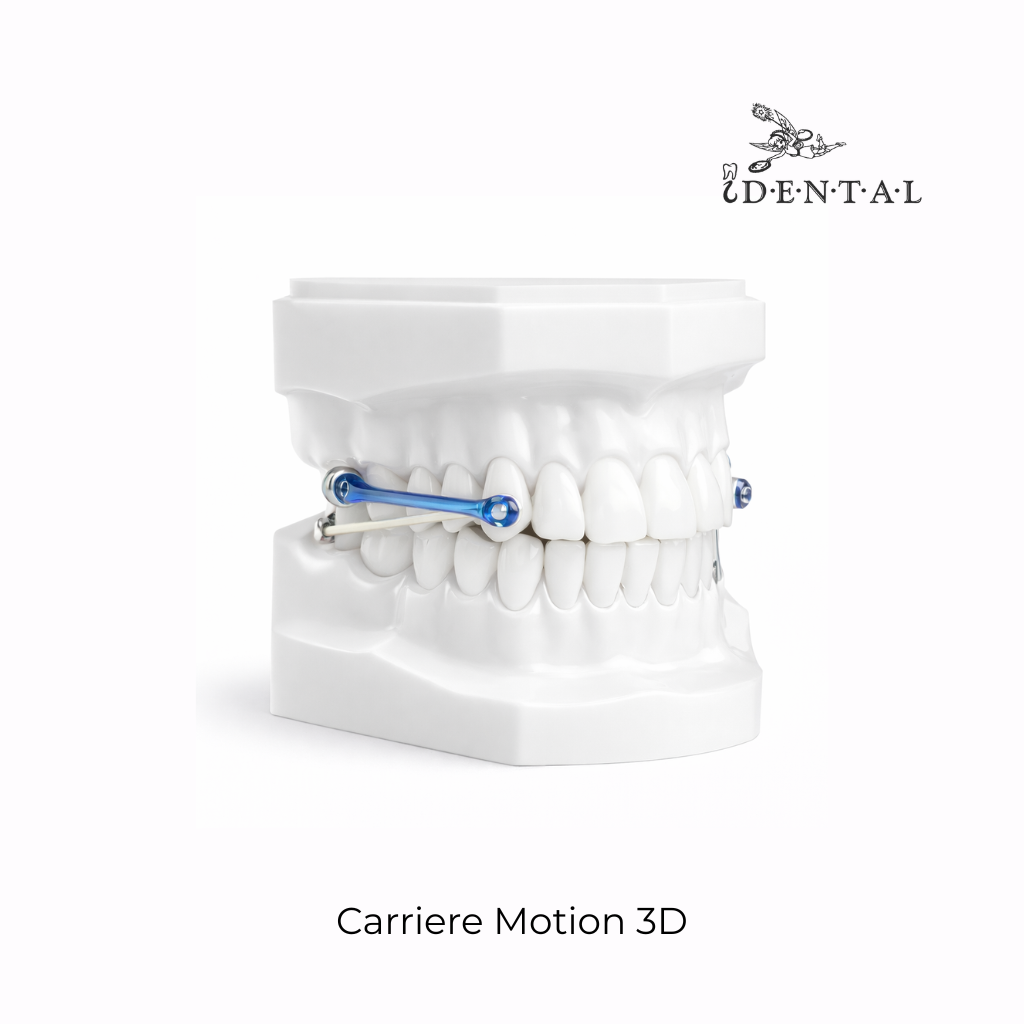
Carriere Motion 3D
The Carriere Motion 3D is an orthodontic appliance used to correct an overbite where the upper teeth sit too far forward compared to the lower teeth. It works by gently guiding the back teeth into a better position early in treatment, which can make the next phase with braces or clear aligners simpler and more efficient.
The appliance is bonded to the teeth on one side of the upper arch and is typically worn with elastics (rubber bands) that attach to the lower teeth or an aligner. Consistent elastic wear is key, since the elastics provide the steady force that moves the bite. Most patients adjust quickly, and our team will show you exactly how to wear the elastics, keep the appliance clean, and what to do if something feels loose or uncomfortable.
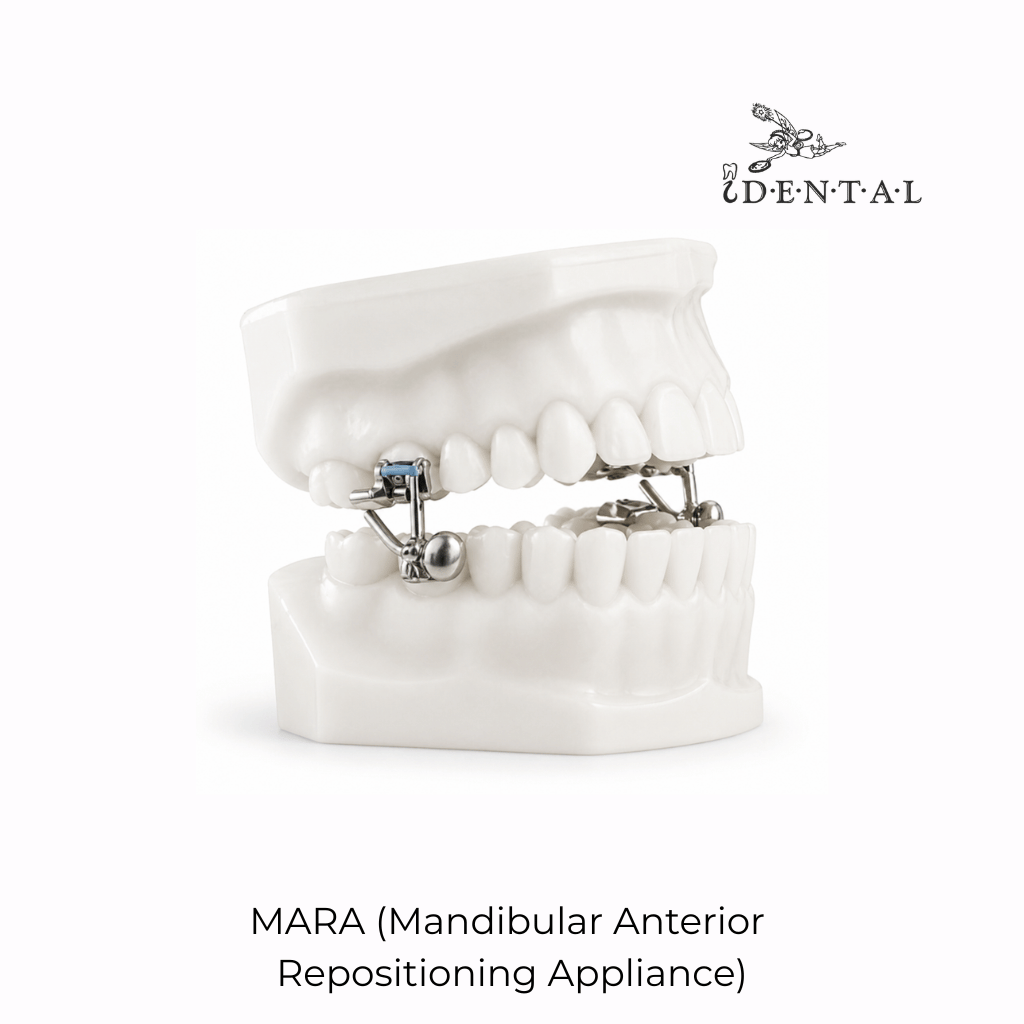
MARA (Mandibular Anterior Repositioning Appliance)
MARA (Mandibular Anterior Repositioning Appliance) is a fixed orthodontic appliance used to correct a bite where the upper teeth sit too far forward compared to the lower teeth, often called a Class II bite. It helps guide the lower jaw into a more forward position during growth, improving how the teeth and jaws fit together and supporting a healthier bite.
Because MARA is attached to the back teeth, it works full-time and does not depend on remembering to wear it. Most patients feel some pressure or muscle soreness at first as the jaw adjusts, and speech or chewing can feel a little different for a short time. Our team will review what foods to avoid, how to keep it clean, and what to do if anything feels uncomfortable or loose.
Tooth Alignment
Bite correction appliances focus on how the upper and lower teeth fit together. They help address issues like overbite, underbite, crossbite, and open bite, improving both function and long-term oral health.
Bite correction appliances focus on how the upper and lower teeth fit together. They help address issues like overbite, underbite, crossbite, and open bite, improving both function and long-term oral health.
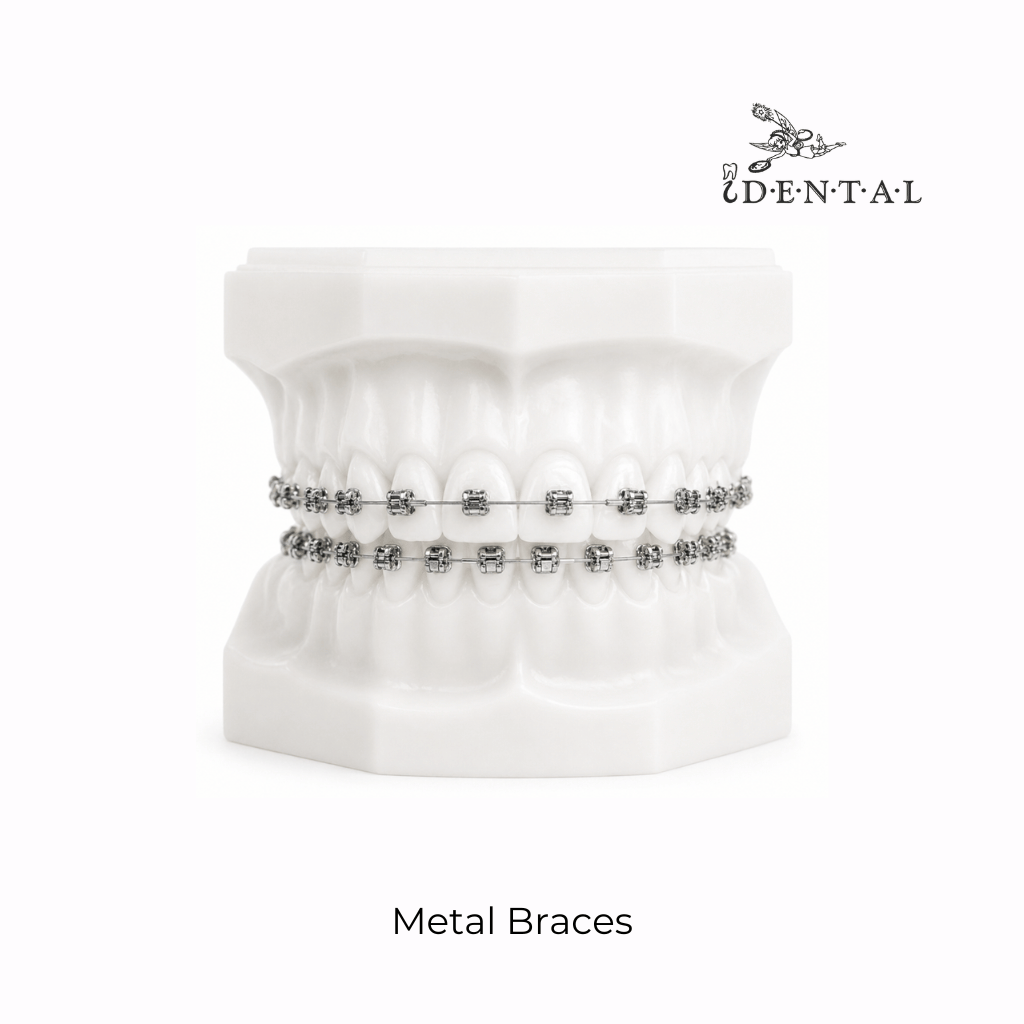
Metal Braces
Traditional metal braces are a proven orthodontic treatment that straightens teeth and improves your bite using small metal brackets and a thin wire (archwire). The brackets are bonded to the front of your teeth, and the wire connects them, applying gentle, steady pressure that gradually moves teeth into better alignment. Metal braces can treat everything from mild crowding to more complex bite issues, making them one of the most reliable options for kids, teens, and adults.
You may feel pressure or soreness for a few days after braces are placed or adjusted, which is normal as your teeth begin to shift. Keeping your teeth clean is especially important with braces, so we will show you the best way to brush and floss and what foods to avoid to prevent broken brackets. With regular checkups and good home care, metal braces can create a healthier, straighter smile that is easier to keep clean long-term.
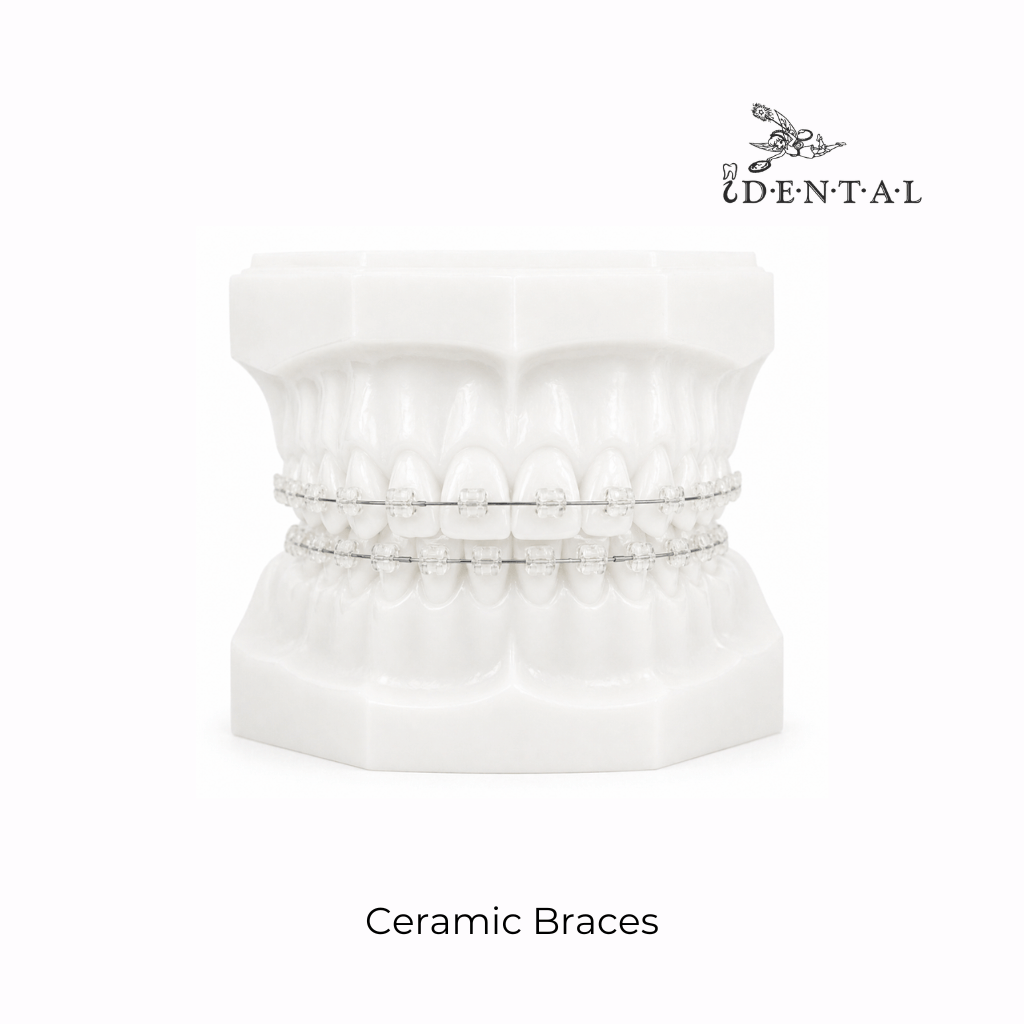
Ceramic Braces
Ceramic braces work like traditional metal braces, but they use clear or tooth-colored brackets that blend in more naturally with your smile. A thin archwire connects the brackets and applies gentle, steady pressure to move your teeth into better alignment. Ceramic braces can treat many of the same concerns as metal braces, including crowding, spacing, and bite problems, while offering a more discreet look.
Because the brackets are lighter in color, they can stain if you are not careful, so good brushing and avoiding frequent dark drinks (like coffee, tea, or soda) helps keep them looking clear. You may feel mild soreness after adjustments, which is normal. With consistent hygiene and regular visits, ceramic braces can deliver excellent results with a less noticeable appearance.

For Wisconsin orthodontic reviews, the Salzmann score must be documented on official forms and submitted along with supporting records. These records may include:
study models or digital scans
photographs
radiographs (X-rays)
Wisconsin may also use Automatic Qualifiers for clearly severe cases, such as cleft palate or certain craniofacial conditions. In these situations, the case may be reviewed based on the severity of the condition rather than only on the numerical score.
Our team can help gather the necessary records and explain what may be needed for your child’s orthodontic evaluation.
Important Notes for Wisconsin
No. A Salzmann evaluation does not automatically guarantee insurance approval. It is one part of the review process. Final decisions are always made by the insurance company based on your plan’s rules and required documentation.
Insurance guidelines can feel confusing, but we’ll help make the process easier to understand. If you have questions about whether braces may be covered, our team is happy to review your benefits and explain the next steps.
Does a Salzmann Score Guarantee Approval?