

Crossbites: What They Are, Why They Happen, and the Different Types
If you caught our post last week about overbite vs. underbite, this week we are focusing on another common bite issue: crossbites. Crossbites can affect your comfort, how evenly your teeth wear down, and even how your jaw functions over time. Below, we will break down what a crossbite is, the different types, and why getting it checked matters.
What is a crossbite?
A crossbite happens when one or more upper teeth bite inside the lower teeth instead of slightly outside them. In a healthy bite, the upper teeth are typically a little wider and sit on the outside of the lower teeth, helping protect your cheeks and distribute chewing forces evenly. With a crossbite, that relationship flips for certain teeth or sections of the bite.
Crossbites can involve just a few teeth, or they can involve the way the jaws fit together. They can also be mild or more noticeable. Even a small crossbite can matter, especially if it causes your jaw to shift when you close.
Why crossbites matter
A crossbite is not just a cosmetic issue. Over time, it can contribute to:
Uneven tooth wear or chipping
Gum recession around the affected teeth
Jaw discomfort or muscle fatigue
Difficulty chewing efficiently
In kids and teens, uneven jaw growth if the bite shifts to one side
That is why dentists and orthodontists often recommend evaluating a crossbite sooner rather than later.
The different types of crossbites
Crossbites are usually described in two ways: by where they occur (front vs back) and by what is causing them (tooth position vs jaw structure).
1) Anterior crossbite (front crossbite)
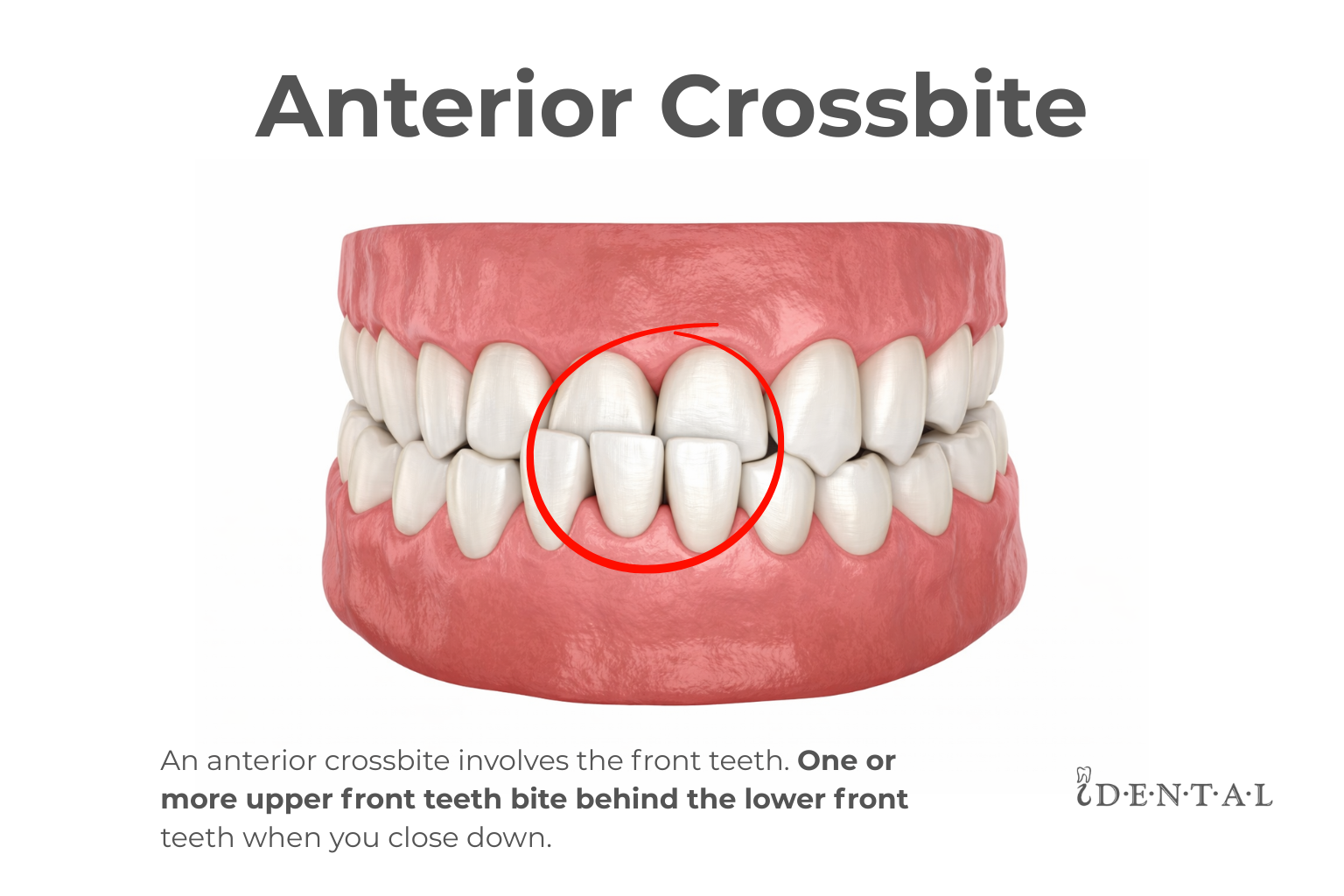
An anterior crossbite involves the front teeth. One or more upper front teeth bite behind the lower front teeth when you close down.
Common reasons this happens include:
Crowding that forces a tooth to erupt out of position
A tooth getting “stuck” behind the lower teeth during eruption
Habit patterns (like certain tongue postures)
A jaw relationship where the lower jaw sits forward relative to the upper jaw
Important note: People sometimes use the word “underbite” for a front crossbite, but they are not always the same thing. A true underbite usually refers to a jaw-to-jaw relationship, while an anterior crossbite might involve only one or two teeth.
2) Posterior crossbite (back crossbite)
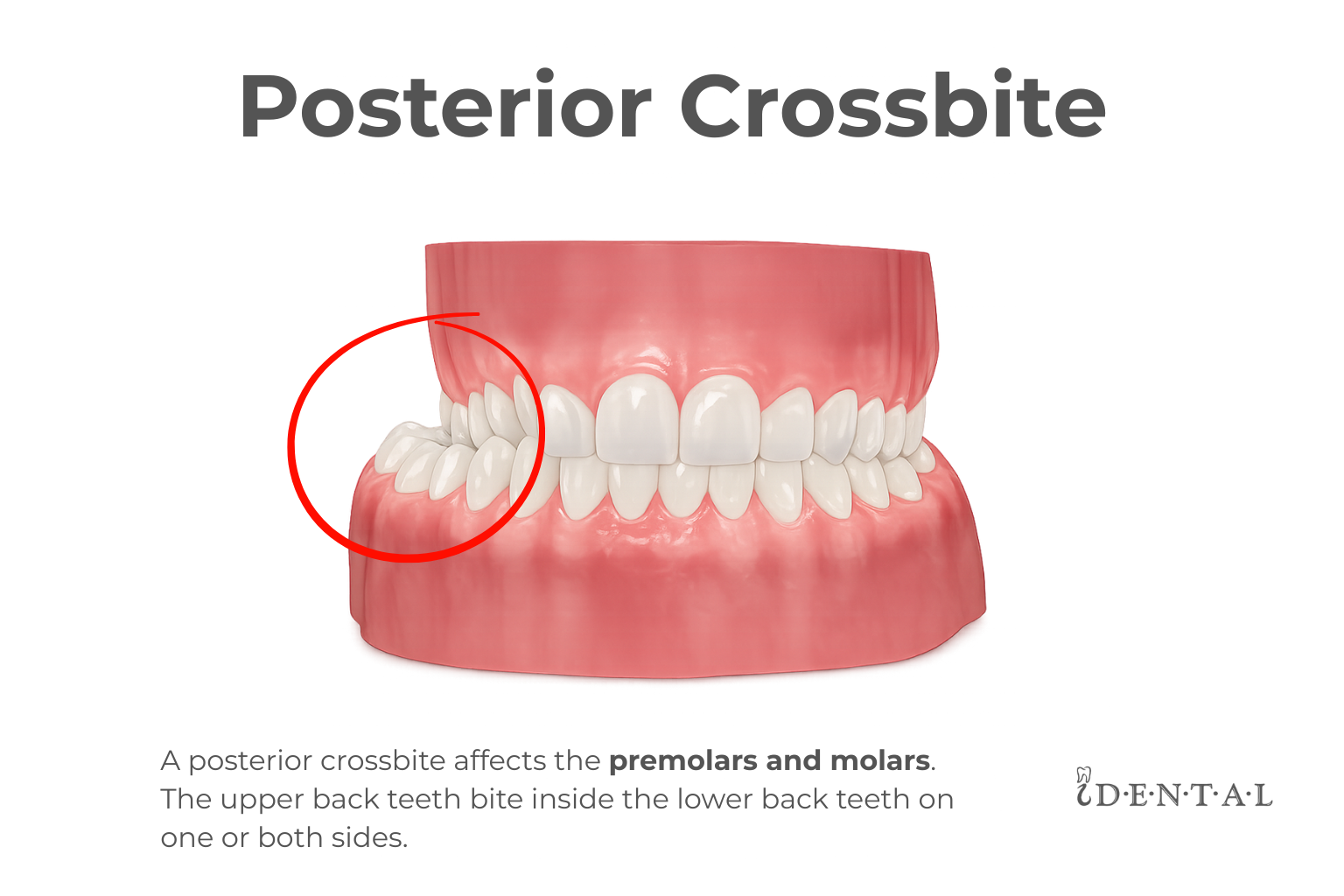
A posterior crossbite affects the premolars and molars. The upper back teeth bite inside the lower back teeth on one or both sides.
This type is often linked to:
A narrow upper jaw or narrow upper dental arch
Crowding or rotation of back teeth
Mouth breathing and airway-related development patterns
Early tooth loss or delayed eruption that changes the bite
Posterior crossbites are especially important to evaluate in kids, because the upper jaw can often be guided and widened more easily during growth.
How are crossbites treated?
Treatment depends on the type and age of the patient. A few common approaches include:
Braces or clear aligners to correct dental crossbites
Palatal expansion (often in kids/teens) for a narrow upper jaw
Crossbite elastics to help guide upper and lower teeth into the right relationship
Bite ramps or bite blocks to temporarily “unlock” the bite so teeth can move safely
Comprehensive orthodontics and, in select adult cases, surgical options when the issue is primarily skeletal and more severe
The earlier a crossbite is evaluated, the more options there typically are, especially for widening a narrow upper jaw during growth.
When should you get a crossbite checked?
If you notice any of these signs, it is worth scheduling an orthodontic evaluation:
Top teeth biting inside the bottom teeth
Jaw shifting left or right when closing
Uneven tooth wear or chipping
Frequent cheek biting
Jaw soreness or popping
A child whose bite looks “off” as adult teeth come in
Crossbites are common, treatable, and come in different types. It is not just about how your smile looks, it is about your comfort and your long-term oral health. If you think you may have a crossbite, it is important to get it checked so we can understand what is causing it and prevent issues like uneven wear, gum irritation, or jaw strain over time. iDental offers free orthodontic consultations, and our team can recommend the approach that best fits your bite and supports your long-term oral health.