

Home / Orthodontics / Orthodontic Appliances
Habit Appliances · Expanders · Space Maintainers · Retainers
Custom Orthodontic Appliances at iDental
Custom appliances that guide growth, hold space, and protect your child's bite.
Not every orthodontic problem is solved with braces. Many are corrected earlier and more simply with a small custom appliance that widens a narrow jaw, stops a thumb or tongue habit, or holds space open until a permanent tooth comes in.
Below are the appliances our orthodontic team uses most often, what each one does, and when it is typically recommended.

Early treatment for growing children and young teens
Appliances designed, fitted and adjusted in our Racine office
Same office as your family dentistry — no outside referral
Saturday appointments · ¡Hablamos español!
Habit Appliances
Stopping habits before they change the bite
Thumb sucking and tongue thrusting put steady pressure on developing teeth and jaws. A habit appliance interrupts that pressure so growth can get back on track.
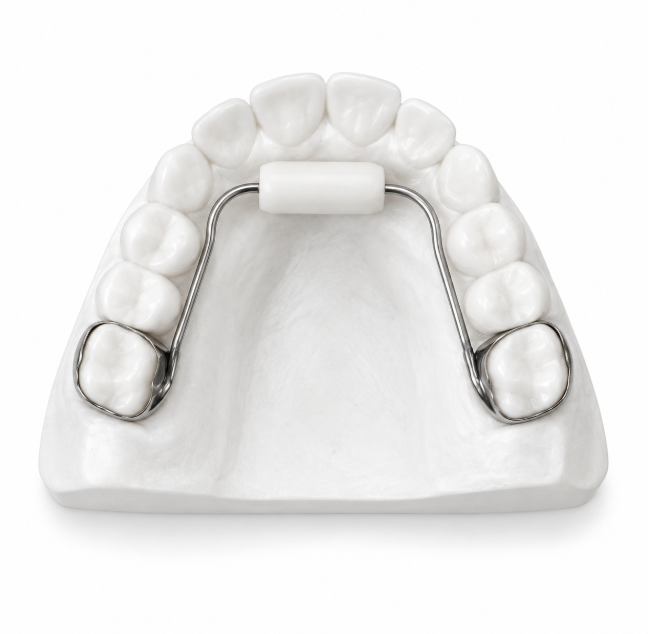
Tongue Habit Appliance
A tongue habit appliance is a custom orthodontic device used to stop tongue thrusting and correct harmful resting tongue positions.
How it works
Physical barrier: It blocks the tongue from pushing against or between the front teeth during swallowing or at rest.
Behavioral reminder: It retrains the muscles and trains the tongue to rest in the proper spot on the roof of the mouth.
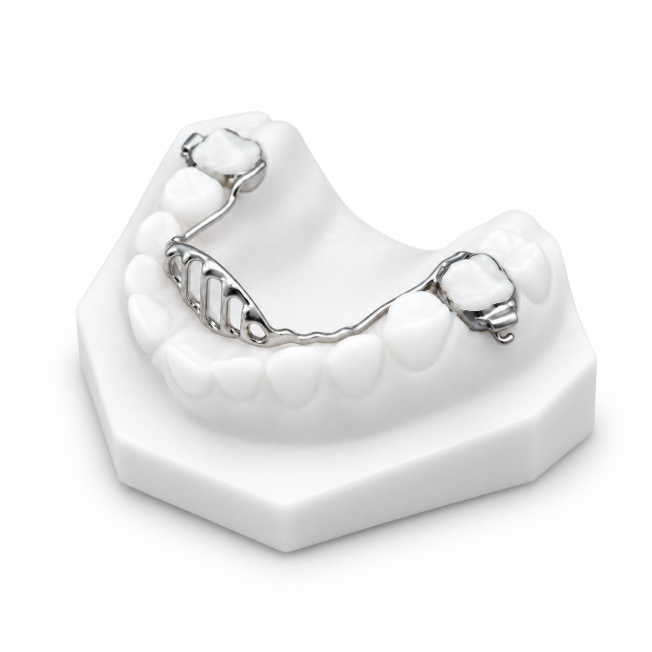
A thumb habit appliance is a dental device used to stop a persistent thumb-sucking habit in children or adults.A tongue habit appliance is a custom orthodontic device used to stop tongue thrusting and correct harmful resting tongue positions.
Thumb Habit Appliance
How it works
Breaks the seal: It stops the suction that makes thumb-sucking feel good.
Blocks the thumb: It physically prevents the thumb from reaching the roof of the mouth.
Stops damage: It protects teeth and jaw development from moving out of place.
Jaw Development
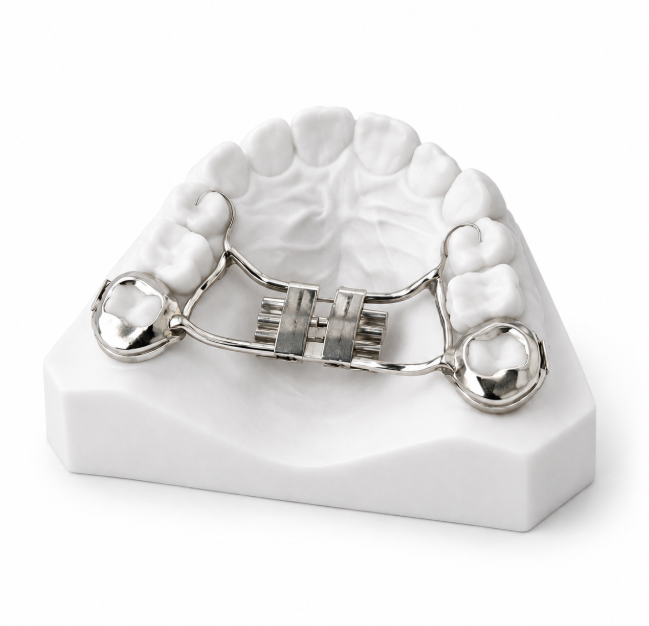
A Rapid Palatal Expander (RPE) is an orthodontic appliance used to gradually widen a narrow upper jaw (maxilla). It gently widens the upper jaw, fixes crowding, improves the bite, and makes room for incoming teeth. A little pressure at first is normal, but adjustment is quick.
The appliance includes a small screw in the center that is turned using a special key. Each adjustment slowly widens the upper jaw over time in a safe and controlled way.
Rapid Palatal Expander (RPE)
Purpose and Benefits
Corrects crossbites : Fixes cases where the upper teeth bite inside the lower teeth.
Creates space : Generates room for crowded permanent teeth to erupt properly.
Improves breathing : Helps expand the nasal cavity when a narrow palate restricts breathing.
Best for growing patients : Most effective in children and young teens whose jaw bones have not yet fused.
Space Maintainers
Holding space when a baby tooth is lost too early
A space maintainer is an intraoral appliance used to preserve arch length following premature loss of a primary tooth, so permanent teeth can erupt into proper alignment and occlusion. The best space maintainer is the primary tooth itself — when one is lost early, an appliance takes over that job.
Keep neighboring teeth from shifting into the gap.
Preserve room for the permanent tooth to come in.
Reduce the risk of crowding and changes in tooth alignment.
Potentially make future orthodontic treatment less complicated.
How it helps
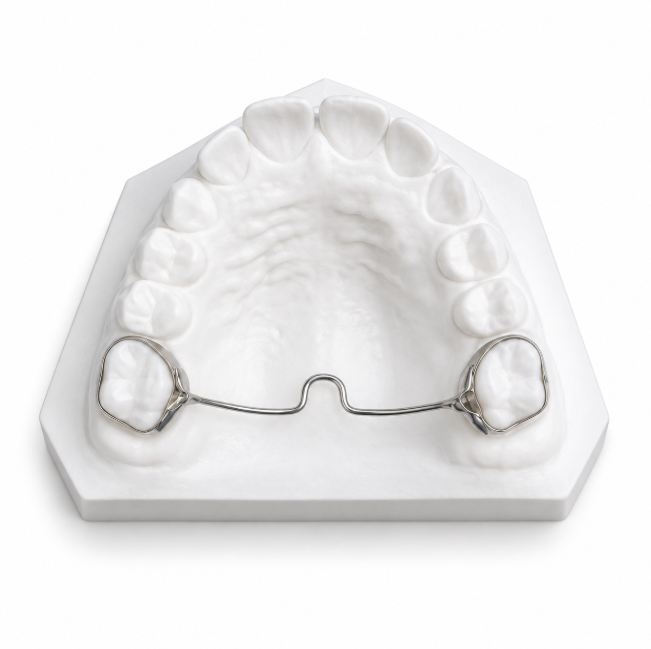
A wire crossing the roof of the mouth between the upper molars, holding them in position and preserving arch length on both sides.
Transpalatal Arch
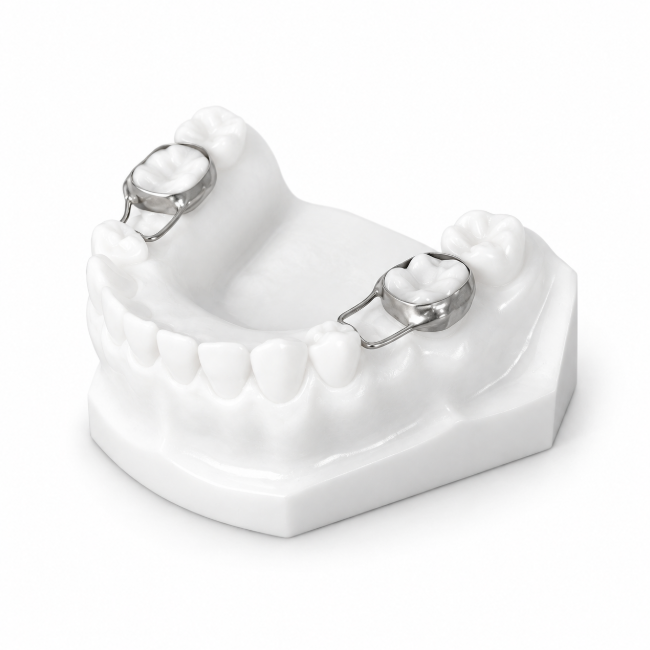
Band and Loop Space Maintainer
A band cemented to one tooth with a loop extending across the gap, keeping a single space open until the permanent tooth erupts.
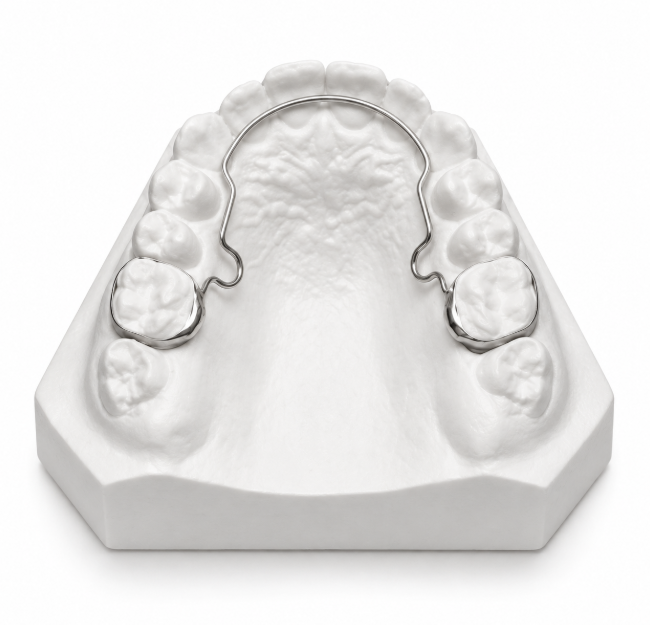
The upper-arch counterpart, holding the upper molars in place so arch length is preserved while permanent teeth come in.
Upper Lingual Holding Arch
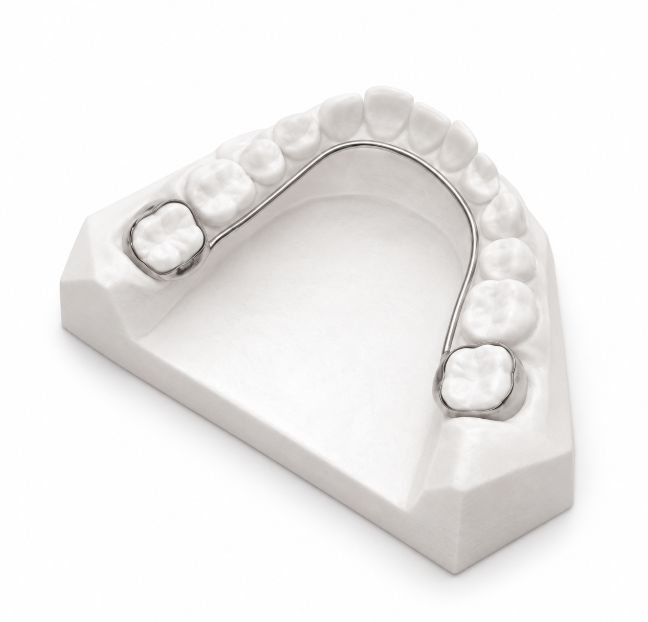
A wire running behind the lower teeth, connecting the molars and preventing them from drifting forward. Available with or without loops.
Lower Lingual Holding Arch
Upper arch anchorage
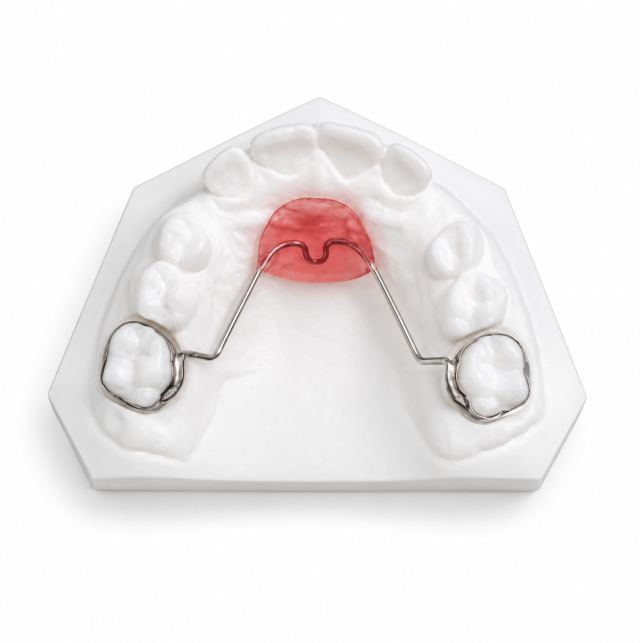
A Nance palatal arch rests against the roof of the mouth and holds the upper molars in position while permanent teeth come in.
Nance Appliance
Palatal anchorage: An acrylic button rests against the palate and is connected by wire to bands on the upper molars, holding them from drifting forward.
When it is indicated: Used in maintaining the maxillary first premolar when there is bilateral premature loss of primary teeth with no loss of space in the arch and a favorable mixed dentition.
When it is not: Not used with palatal lesions, or if either of the molars has not erupted.
Modifications: A modified Nance appliance allows unilateral molar distalization. An esthetic Nance palatal arch adds teeth in the anterior region, serving as a space maintainer and also for anterior esthetics.
How it works
After Treatment
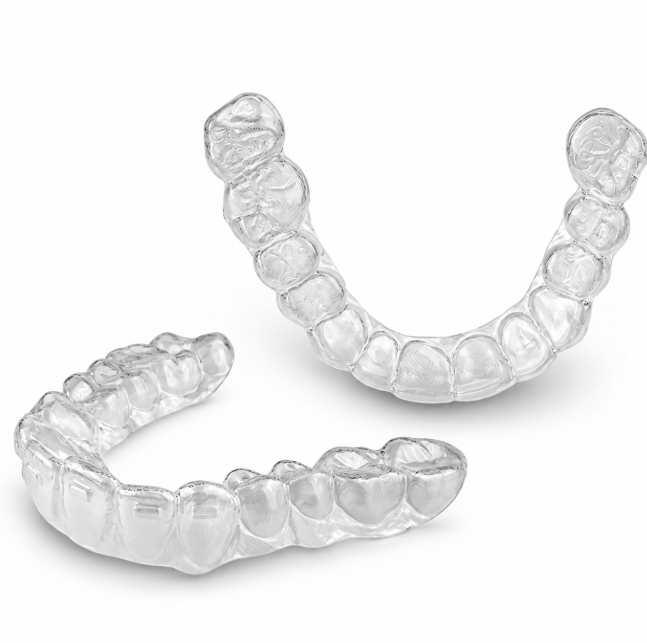
Upper and Lower Clear Retainers
Custom fit: Made from a scan or impression of your finished result, so each tray sits precisely over your own teeth.
Nearly invisible: Thin clear plastic that is far less noticeable than a wire retainer across the front teeth.
Removable: Taken out to eat and to brush, then put straight back in — usually full time at first, then nights only.
Easy to care for: Rinse after each wear, clean gently with a soft brush and cool water, and always store in the case, never in a napkin.
Clear retainers are thin, transparent trays custom-made from a digital scan or impression of your teeth after active orthodontic treatment ends. Each tray fits over the full upper or lower arch and holds the teeth in their corrected positions while the bone and gum tissue around them settle.
Teeth naturally drift after braces or aligners come off, and that tendency never fully goes away. Wearing retainers as directed is what keeps the result you spent months earning.
Not sure which appliance your child needs?
Most appliance decisions start with a single evaluation. We check the bite, jaw width, spacing and eruption pattern, then explain what is needed now and what can wait.
The American Association of Orthodontists recommends a first orthodontic check by age 7.
iDental Orthodontics and Family Dentistry
1320 S Green Bay Rd
Racine, WI 53406
Request an Orthodontic Evaluation