

Summer Drinks and Your Teeth: What to Sip, Limit, and Watch Out For
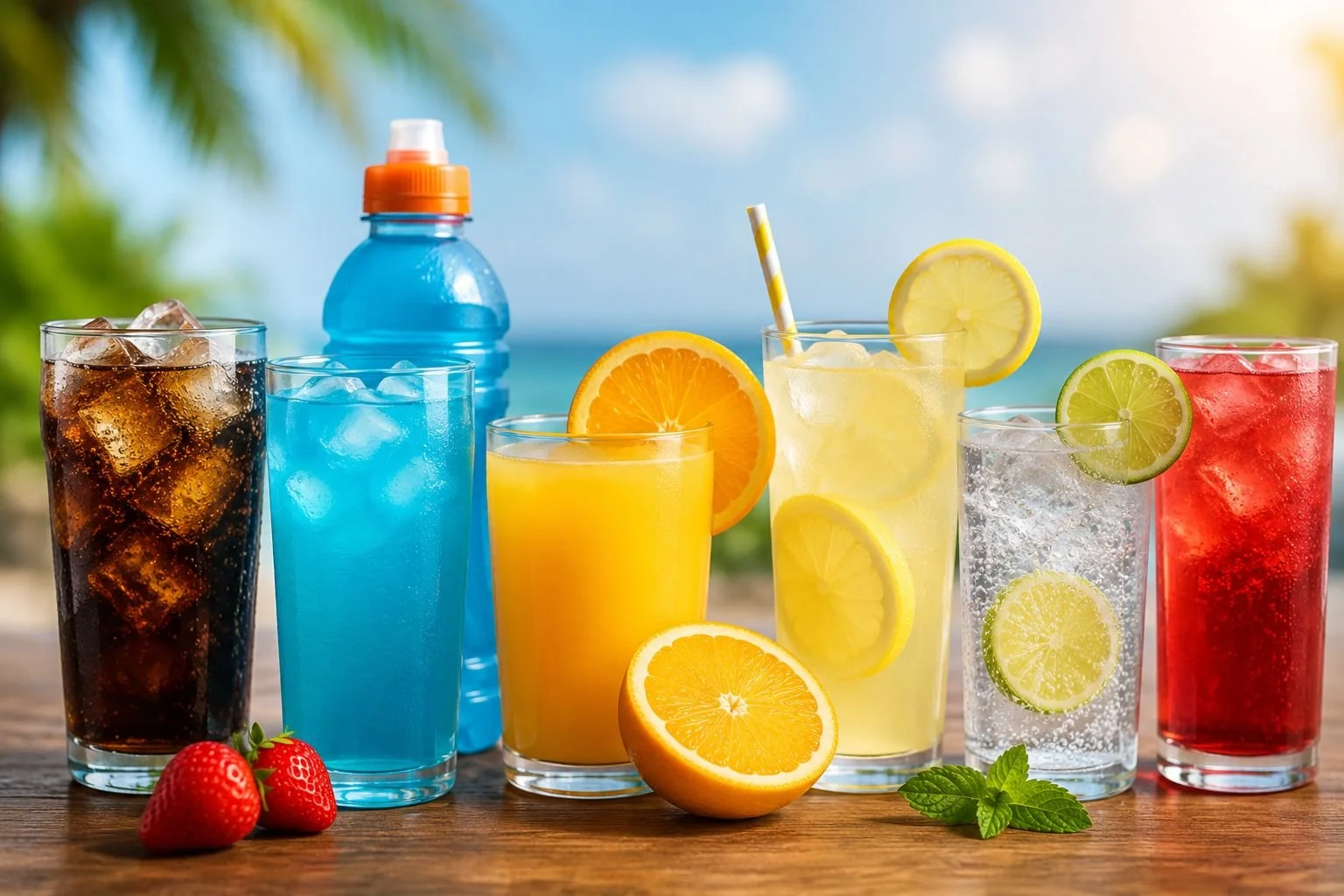
June is National Oral Health Month, an annual reminder supported by the American Dental Association to give your smile a little extra attention. It also lines up with the season when cold drinks come out in full force. Between soda at the cookout, sports drinks after practice, lemonade on the porch, and energy drinks to power through a long day, summer brings a lot more sipping for families, teens, and adults alike.
The trouble is that many of those refreshing favorites can be hard on your teeth. Here is a plain-language look at what is happening, drink by drink, plus simple habits that let you enjoy summer without paying for it later.
Two things that wear down your teeth: sugar and acid
There are really two culprits at work in most summer drinks.
The first is sugar. We all have bacteria living in our mouths, and they feed on the sugars we consume. As those bacteria break sugar down, they produce acids that attack tooth enamel, the hard outer shell of your teeth where cavities first form. The American Dental Association notes that this process can lead to cavities and enamel erosion over time.
The second is acid that is already in the drink itself. Many beverages are acidic on their own, whether or not they contain sugar. Acidic drinks gradually dissolve the minerals in enamel, a process dentists call erosion. According to the ADA, tooth erosion is permanent. Once enamel is worn away it does not grow back, and the result can be sensitivity to hot and cold, a dull or yellowed look as the layer beneath shows through, and a higher risk of decay.
So a drink can be a problem because it is sugary, because it is acidic, or, in many cases, because it is both.
A drink-by-drink guide
Soda
Regular soda is a double hit. It is loaded with sugar that feeds bacteria, and it is also highly acidic thanks to ingredients like phosphoric and citric acid. Diet soda skips the sugar but is still acidic, so it can still wear at enamel over time. Soda is one to keep occasional rather than daily.
Sports drinks
Sports drinks feel healthy, especially after a workout in the heat, but most are both sugary and acidic, with a pH low enough to soften enamel. In one laboratory study comparing popular beverages, a common sports drink produced more enamel surface loss than several energy drinks and a cola. The takeaway is that the "healthy" label on the bottle does not tell you much about what the drink does to your teeth. For most everyday hydration, plain water does the job.
Energy drinks
Energy drinks tend to be the most acidic of the bunch, with pH levels often in the 2.4 to 3.4 range, plus a high sugar load. Research has linked frequent energy drink consumption to erosive tooth wear, with an especially strong association seen in athletes. If they are part of your routine, they are worth cutting back on for your teeth as much as the rest of your health.
Fruit juice
Even 100 percent juice with no added sugar is naturally sugary and acidic. Many fruit juices sit around a pH of 3 to 4, and some research has found they can be as erosive as soda, or more so. Juice is fine in moderation, but it is better enjoyed with a meal than sipped slowly throughout the day.
Lemonade
Lemonade is a summer classic, and it is also a textbook example of the sugar-plus-acid combination. Citrus is naturally high in acid, and most lemonade adds plenty of sugar on top. Like juice, it is best treated as an occasional treat rather than an all-day drink.
Sparkling water
Here is the good news for the seltzer fans. Plain, unsweetened sparkling water is generally fine for your teeth. The ADA points to research in which donated teeth were soaked in sparkling water and in regular water, and the effect on enamel was about the same. Carbonation makes sparkling water slightly more acidic than still water, but to your teeth it behaves mostly like water.
The thing to watch out for is what gets added. Citrus-flavored versions are more acidic, and any sparkling water with added sugar is no longer just sparkling water. Enjoy flavored or citrus seltzers in one sitting or with a meal rather than nursing them all afternoon.
Plain water
The clear winner is water, especially fluoridated tap water. It has no sugar and no acid to speak of, it rinses away food and leftover sugar that bacteria feed on, and the fluoride in most tap water actively helps protect enamel. It is the best thing you can sip all summer long.
This article is for general educational purposes and is not a substitute for professional dental advice, diagnosis, or treatment. Please talk with your dentist about your individual needs.
Sources
American Dental Association, MouthHealthy: "Sugar, Drinks and Dental Health"
American Dental Association, MouthHealthy: "Dietary Acids and Your Teeth"
American Dental Association, MouthHealthy: "The Truth About Sparkling Water and Your Teeth"
"Evaluation of Enamel Volume Loss after Exposure to Energy Drinks," Oral (MDPI), 2024
"Erosive Potential of Sports, Energy Drinks, and Isotonic Solutions on Athletes' Teeth: A Systematic Review," Nutrients (MDPI), 2025